
Three Arpents in Mobile: The Land Dispute Ryder Did Not Live to Finish
A claim that began with a Spanish land grant in 1810 reached Alabama’s Supreme Court in 1833. Between those dates lay a disputed lot, a business winding down, and a lawsuit inherited by Ryder’s heirs.
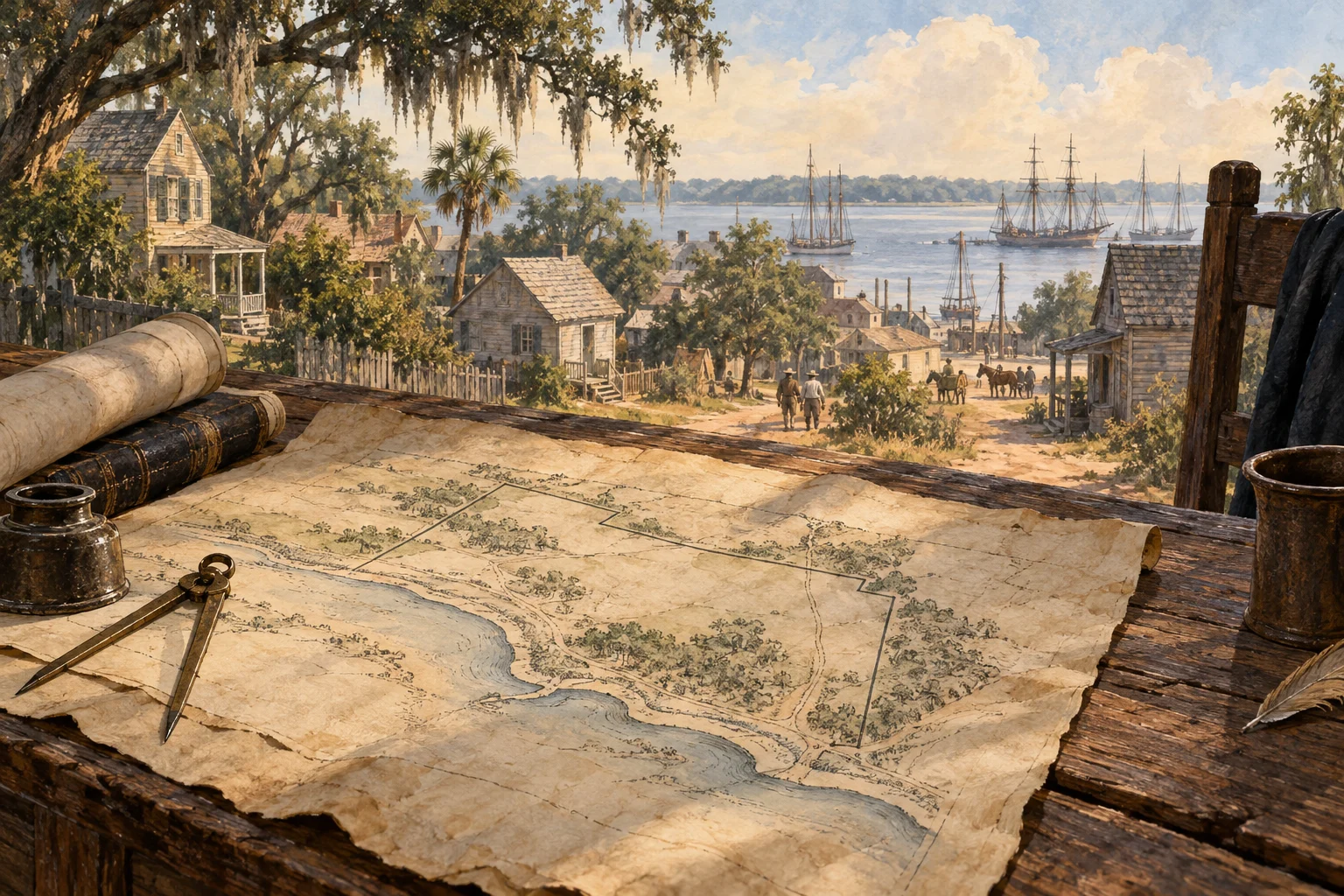
Ryder challenged the judgment that had gone against him over a lot in Mobile. He did not live to see the appeal decided. By the time Alabama’s Supreme Court considered the case in January 1833, his heirs were carrying it forward. The opposing claim reached back to a woman’s request for land more than twenty years earlier, when the papers were addressed to a Spanish commandant. [1]
Campbell’s garden
In August 1810, Issabella Campbell petitioned the commandant for three or four arpents at the back of Mobile. Her proposed tract lay beside land belonging to John Forbes & Co. and a street the report spells Joackim in one passage and St. Joakim in another. Cayetano Perez granted three arpents and directed that the land be measured, with conditions to be met before Campbell sought her formal title. [1]
The petition also described what Campbell intended to do there: put enslaved people to work making a garden. The court report preserves that purpose but gives none of those people’s names. Behind the later arguments over certificates and surveys was land sought for their forced labor. [1]
A claim passes through several hands
The paper trail continued under United States authority. A certificate dated November 4, 1822, from the register and receiver at Jackson Court House, Mississippi, confirmed the claim of Campbell’s representatives under an act of Congress passed that May. A survey followed in 1823. [1]
By the time of the lawsuit, Innerarity traced his title from Campbell to John Forbes & Co., then from the firm to himself. As its surviving partner, he had sought a court-ordered sale of the company’s lands to close its affairs. The disputed lot was sold under that decree, and he bought it. [1]
Ryder was in possession. According to the report, he offered no paper title at trial and relied on possession alone. Innerarity won in the Circuit Court of Mobile. Ryder then challenged the evidence that had helped secure that result. [1]
Could these papers be trusted?
Ryder’s objections targeted the links in the chain. The confirmation certificate had arrived without a separate warrant of survey or location. The Spanish material was a copy of a translation, rather than the original document. And Ryder had not been a party to the chancery proceeding through which Innerarity acquired the firm’s land. [1]
The reported argument questioned how a certificate describing three arpents behind Mobile could establish the identity of this particular lot. It also challenged the quality of the translated evidence. Those were arguments by counsel, not findings that the grant had been forged or the translation falsified. [1]
Justice Saffold approached a narrower question: whether the trial court had been allowed to admit the papers as evidence. That was different from deciding whether a certificate, by itself, conclusively settled every possible dispute over the land. [1]
The court accepts the chain
Saffold examined the federal land-confirmation laws and the state rule governing certificates. He concluded that the certificate could be received. The absence of a separate survey warrant did not require its rejection. The Spanish claim had passed through the land office’s review, and a witness had proved the transcript to be a correct copy of its records. [1]
The sale decree could also be admitted. Saffold explained that transferring the firm’s interest to Innerarity did not enlarge that interest or erase a stranger’s better claim. It changed who held the title being asserted. Ryder still faced the same underlying claim, and his absence from the earlier proceeding did not make the transfer inadmissible. [1]
The Supreme Court affirmed the judgment for Innerarity. Ryder’s heirs had continued his challenge, but the objections to the evidence did not overturn the result. [1]
What began as Campbell’s request for a garden had become a contest over which papers could establish a right to a piece of Mobile. The names of the claimants, merchants and judges remained in the report. The enslaved people whose work had been proposed for that ground appeared only as part of someone else’s plan.
Read the case
The archived edition contains the full reported arguments and opinion, printed pages 14–33 of volume 4 of Stewart & Porter, plus all twenty source photographs. One partly obscured marginal reference is marked explicitly. Earlier shortened reading copies and unverified generated audio are excluded. [1]
Sources & archive records
- Ryder v. Innerarity (1833) — full case and photographed pages
Ryder v. Innerarity (1833). Reports of the Decisions of the Supreme Court of Alabama, 4 Stewart & Porter, January Term 1833, pp. 14–33. Twenty source pages checked, including reported counsel arguments and full opinion. One marginal citation on printed p. 30 is partly obscured in the photograph and explicitly marked in the transcription; the original photograph is retained.
Keep reading
View all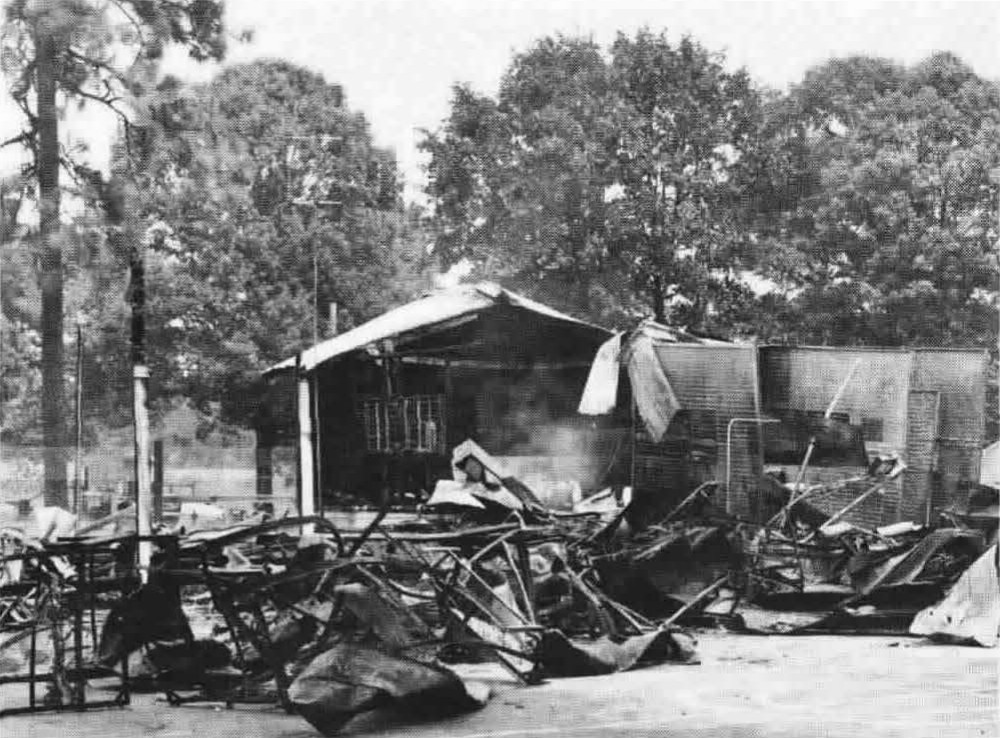
Road Camp 12: The Berrydale Fire That Killed 38 Prisoners
On a Sunday night in 1967, fire swept through a wooden prison barracks in the Florida Panhandle. Fifty-one men were inside. Only thirteen survived.
The Constable, the Missing Return, and the Cost of Justice
An Alabama constable failed to return a court order. In 1833, the dispute that followed forced the state’s highest court to weigh legal formalities against the price of getting justice.
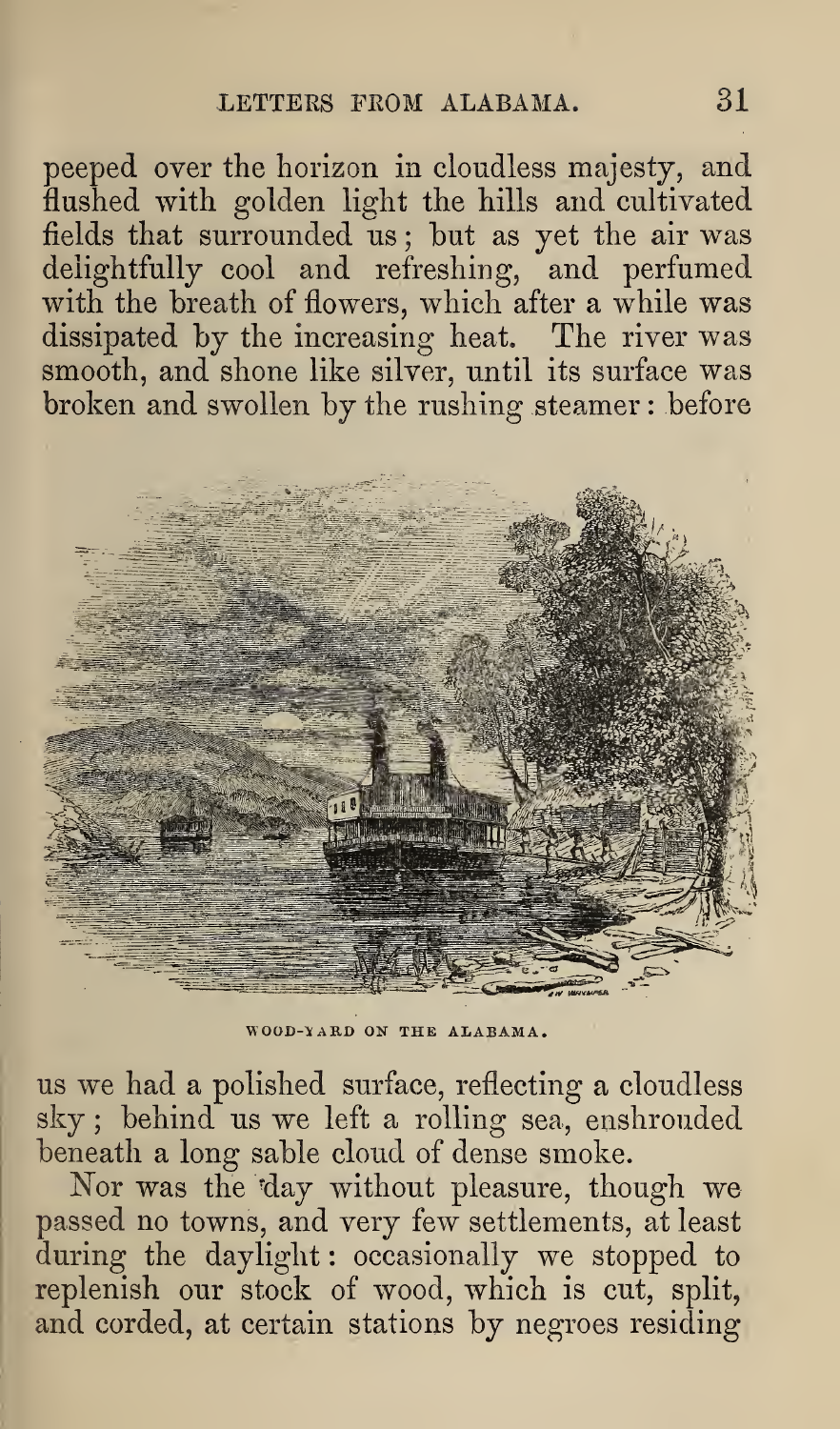
From Mobile by Firelight: The River’s Wood Yards
An 1859 travel account follows a steamer out of Mobile, past fireflies, fuel stations, and the labor that kept it moving.