
From Mobile by Firelight: The River’s Wood Yards
An 1859 travel account follows a steamer out of Mobile, past fireflies, fuel stations, and the labor that kept it moving.
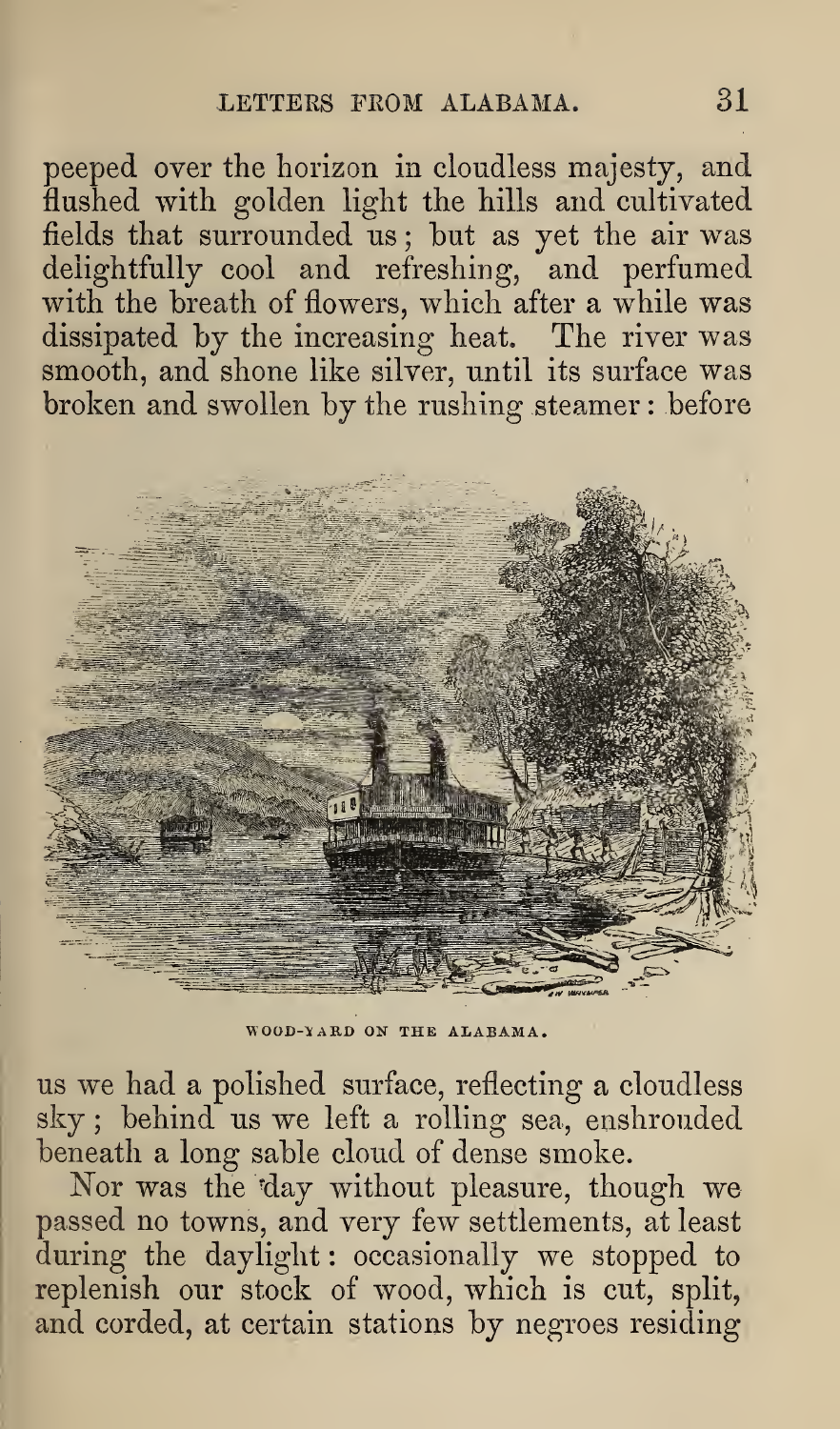
Leaving Mobile after dark, Philip Henry Gosse found a river illuminated in flashes: fireflies among the reeds, reflected stars, and the sudden red light of a wood-yard fire. His account, published in Letters from Alabama in 1859, makes a steamer journey into a sequence of sounds, lights, and stops for fuel. [1]
A passenger’s view
Gosse wrote that he took passage on a high-pressure steamer after reaching Mobile. The early stretch ran through marshes and reeds. Farther along, dark banks and still water framed the boat’s progress. He remained on deck after other passengers went to bed, then watched through his berth window. [1]
At dawn, he described bats and whippoorwills flying over the stream. The rising sun revealed cultivated fields. Behind the vessel, the river’s smooth surface became a wake beneath dense smoke. It is a passenger’s account of travel, with delight in the landscape and very little of the machinery’s operation explained. [1]
The stops that made the journey possible
The steamer periodically stopped to replenish its wood. Gosse described Black workers at riverside stations cutting, splitting, and stacking it. Once the boat stopped, crew members carried the fuel aboard on their shoulders. He marveled at the speed with which the piles disappeared and the journey resumed. [1]
That brief passage shifts attention from scenery to work. The vessel’s movement depended on prepared fuel and people who loaded it. Gosse does not name those workers or establish each person’s legal status in these pages; the article does not fill that gap with an invented biography. [1]
A river with another season written on it
Beyond the wood yards, Gosse noticed cleared estates and young corn or cotton. He said plantation houses were set back from the bank. Debris caught high in trees marked earlier flooding, while exposed roots and fallen trees showed the river wearing away its edges. [1]
The account lets us follow one traveler’s changing view from Mobile into the interior. It is not a survey of river conditions, a timetable, or a complete account of the people along the banks. Its most useful details are also its smallest: a fuel pile, a crew’s shoulders, a light that signals somewhere to stop. [1]
Read the original
This feature is based on printed pages 29–33 of the 1859 edition. The source uses period racial terminology. Descriptions are attributed to Gosse, rather than presented as independently measured environmental or labor data. The publication year should not be mistaken for a verified date of the journey. [1]
Sources & archive records
- Philip Henry Gosse, Letters from Alabama (1859)
London: Morgan and Chase, 1859, printed pp. 29–33. Smithsonian Libraries scan via Internet Archive / Biodiversity Heritage Library.
Keep reading
View all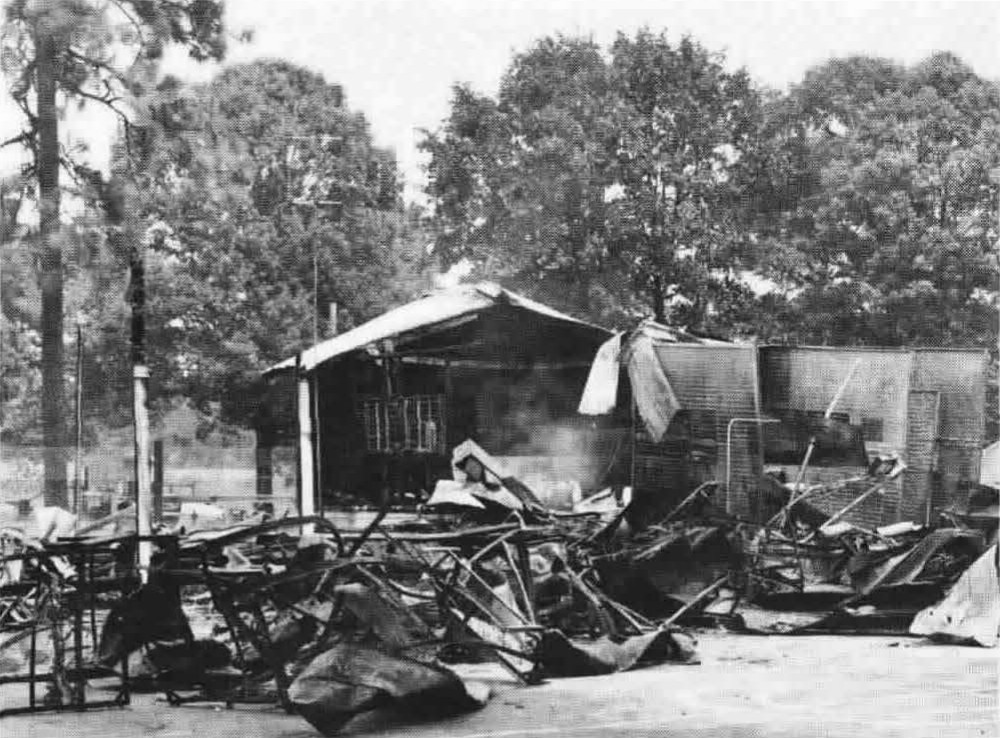
Road Camp 12: The Berrydale Fire That Killed 38 Prisoners
On a Sunday night in 1967, fire swept through a wooden prison barracks in the Florida Panhandle. Fifty-one men were inside. Only thirteen survived.
The Constable, the Missing Return, and the Cost of Justice
An Alabama constable failed to return a court order. In 1833, the dispute that followed forced the state’s highest court to weigh legal formalities against the price of getting justice.
Three Arpents in Mobile: The Land Dispute Ryder Did Not Live to Finish
A claim that began with a Spanish land grant in 1810 reached Alabama’s Supreme Court in 1833. Between those dates lay a disputed lot, a business winding down, and a lawsuit inherited by Ryder’s heirs.