
Leaving Mobile, May 1845: Three Steamboats and the Promises They Made
A single newspaper column of passenger notices shows how Mobile travelled in 1845: by published schedule, by the river's water level, and through agents on Commerce Street.
If you wanted to leave Mobile in May 1845, you might start where many travellers did: with the newspaper.
The record
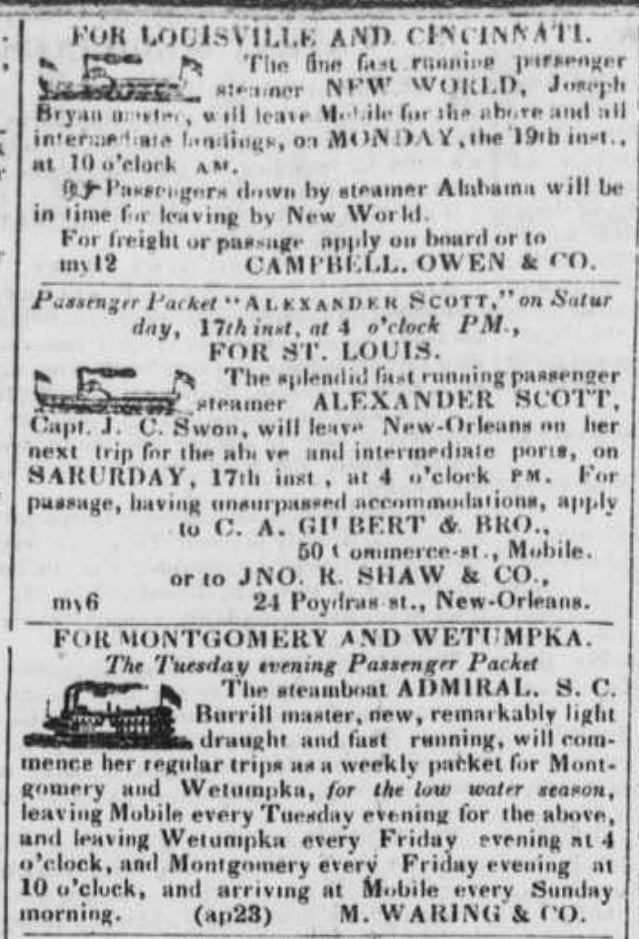
The Mobile Register and Journal of May 13, 1845, carried a column of shipping and passenger notices. Three of them sit together at the top of one column, each with a small woodcut of a steamboat. Each offers a different way out of town. [1]
They are advertisements, not records of what happened. Nothing in them proves that a boat left on time, or at all. [1] But advertisements show what sellers thought customers wanted, and these show what a Mobile traveller in 1845 expected to be promised.
North to the Ohio
The first notice is headed "For Louisville and Cincinnati." The "fine fast running passenger steamer New World, Joseph Bryan master," would leave Mobile on Monday, May 19, at 10 o'clock in the morning, "for the above and all intermediate landings." [1]
One line is aimed at travellers already on the move: "Passengers down by steamer Alabama will be in time for leaving by New World." [1] In other words, someone coming down to Mobile on another boat could plan to make the connection. It was a timetable promise, made in print.
Bookings went through Campbell, Owen & Co., or could be made "on board." [1]
St. Louis, booked from Commerce Street
The second notice offers a longer journey that did not start in Mobile at all.
The "splendid fast running passenger steamer Alexander Scott," Capt. J. C. Swon, would leave New Orleans for St. Louis and intermediate ports on Saturday, May 17, at 4 p.m. It boasted "unsurpassed accommodations." [1]
Mobile readers could book it locally, through C. A. Gilbert & Bro. at 50 Commerce Street, or through Jno. K. Shaw & Co. at 24 Poydras Street in New Orleans. [1] The notice shows that Mobile and New Orleans shared one travel market, with agents in each city selling passage on the other's boats.
The Alexander Scott notice also contains a typo that a careful reader will spot. The headline says "Satur day," but the body of the notice, as printed, reads "SARURDAY." [1]
Up the Alabama, "for the low water season"
The third notice is the most local, and the most revealing.
"For Montgomery and Wetumpka." The steamboat Admiral, S. C. Burrill master, described as "new, remarkably light draught and fast running," would run "as a weekly packet... for the low water season." [1]
The schedule is laid out in full. The Admiral would leave Mobile every Tuesday evening. On the way back, it would leave Wetumpka every Friday at 4 p.m. and Montgomery every Friday at 10 p.m., "arriving at Mobile every Sunday morning." The agents were M. Waring & Co. [1]
Two details stand out. The first is "light draught." A boat that sat high in the water could keep running when the river dropped, and the notice was clearly written with that in mind. The second is the timetable. By the notice's own schedule, the trip downstream from Montgomery to Mobile took from Friday night to Sunday morning.
A weekly packet, a published timetable, a boat built for shallow water: the advertisement sold reliability as much as speed.
Reading the small print
Each notice ends with a short code: "my12," "my6" and "ap23." [1] These appear to be first-insertion dates: May 12, May 6 and April 23. That reading is an interpretation; this single issue does not establish how long each notice ran.
The column also includes other shipping advertisements. The archive preserves those as context but has not transcribed them. [1]
Taken together, the three notices show a city connected by water in three directions: up the Alabama River into the state's interior, west to New Orleans, and on toward St. Louis, Louisville and Cincinnati. For anyone in Mobile in 1845, the newspaper column was where those journeys started.
About the reporting
This story is based on three passenger notices in the Mobile Register and Journal of May 13, 1845, digitized by the Library of Congress's Chronicling America program and preserved in Crypt of Echoes. The archive's transcription is AI-assisted; names, schedules and the quoted spelling were compared with the scan during publication review. Advertised schedules are claims made by advertisers. They do not show whether the voyages took place as described. The first-insertion-date reading of the codes is offered as interpretation.
Sources & archive records
- Mobile steamboat passenger notices - Register and Journal, 1845-05-13
Mobile Register and Journal, 1845-05-13, issue images 1 and 3. Selected passage: Mobile steamboat passenger notices - Register and Journal, 1845-05-13. Library of Congress, Chronicling America.
Keep reading
View all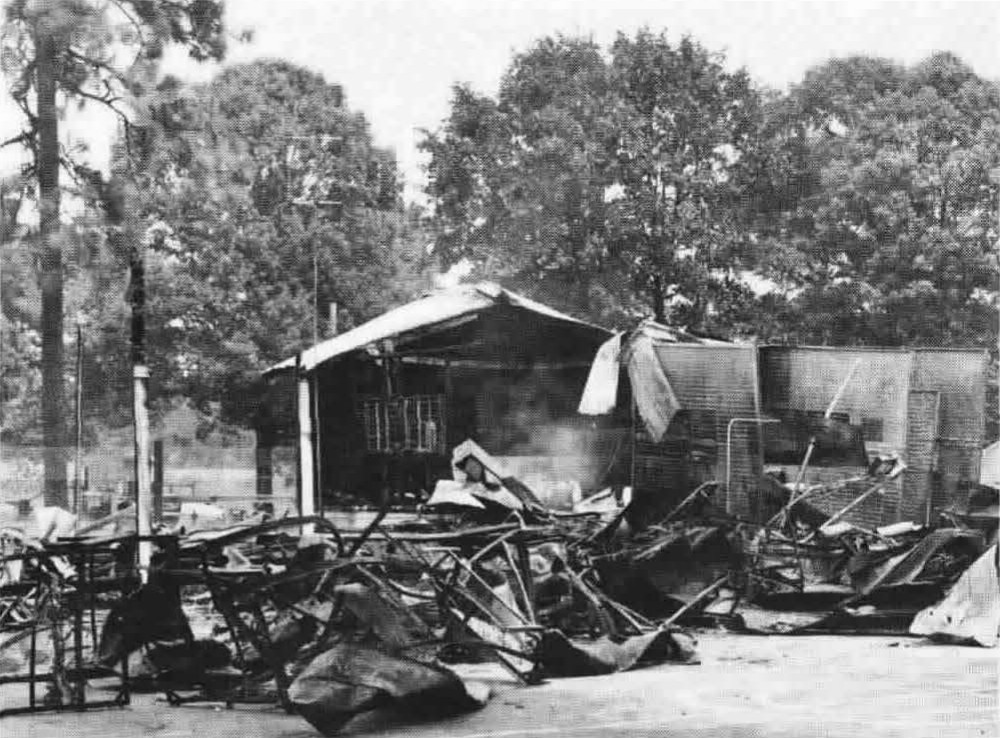
Six Minutes or Nine: What Investigators Said About the Road Camp 12 Fire
Two days after the Berrydale fire, a coroner's jury blamed three prisoners who died in it and found no neglect by the guards. The newspaper reports, official records and later accounts preserved since then do not all agree with one another.
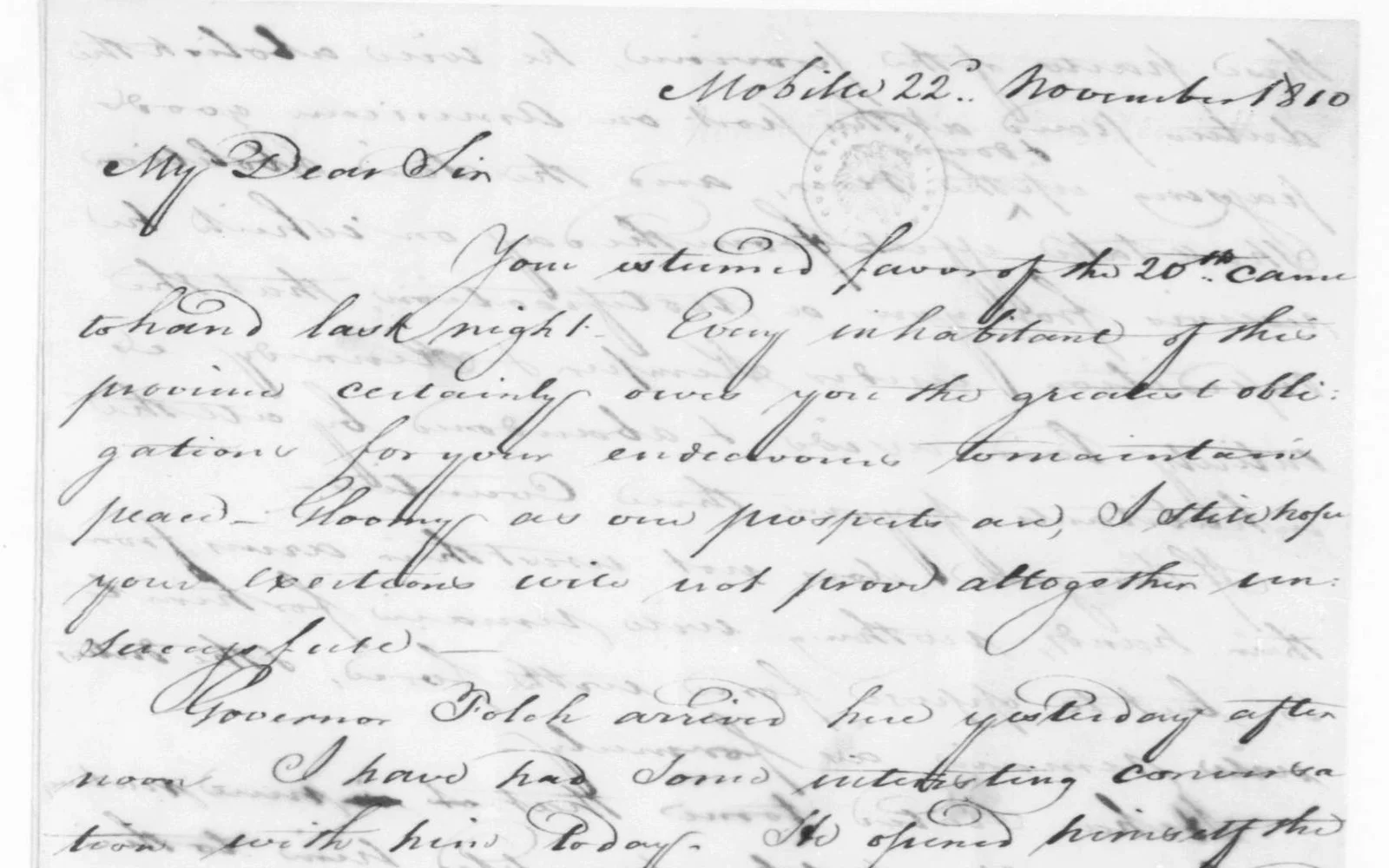
"Averse to Flatter Treason": Mobile's Offer to Trade Taxes for Peace
In November 1810, with an armed American expedition preparing to march on Spanish Mobile, the governor offered through a local merchant to scrap the duties that had angered settlers upriver. A federal judge's private reply shows why he would not use the offer as a bargaining chip.
Road Camp 12: The Berrydale Fire That Killed 38 Prisoners
On a Sunday night in 1967, fire swept through a wooden prison barracks in the Florida Panhandle. Fifty-one men were inside. Only thirteen survived.