
Berrydale’s Locked Barracks: What the Records Reveal About the Fire That Killed 38
Newly recovered state files name the dead, trace changes to keys and wooden camps, and preserve families’ unanswered questions. They also point directly to the evidence still missing from the public record.
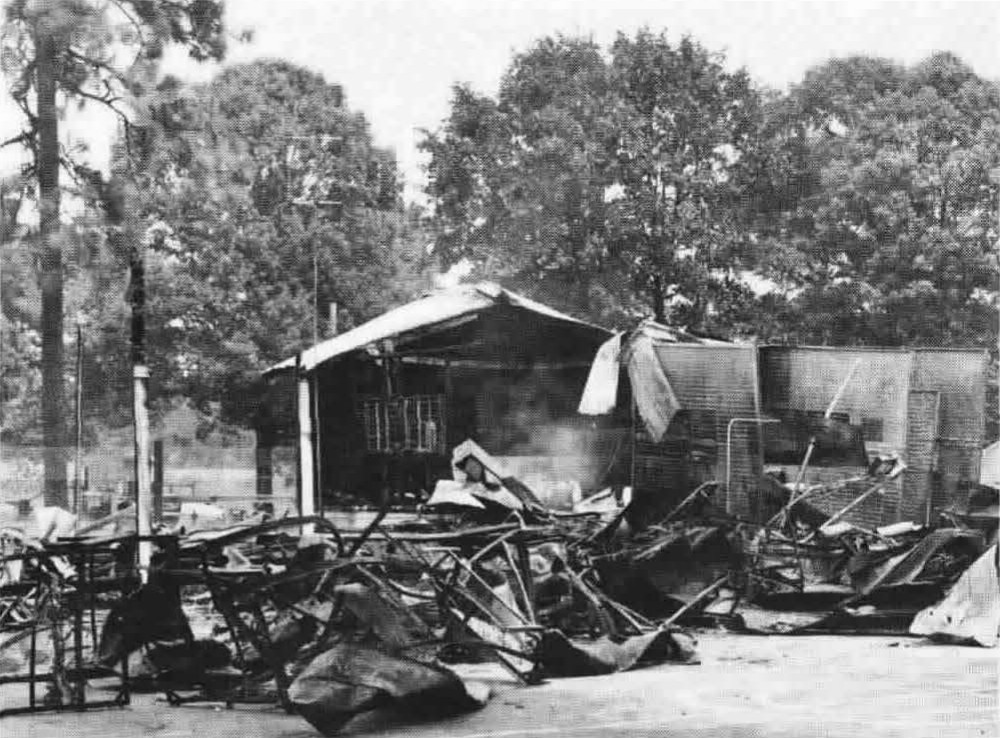
The state cleared its prison officials. Then it changed the keys. In the weeks after 38 prisoners died in the July 16, 1967 fire at Berrydale, Florida officials documented a new rule: the officer stationed at the prisoners’ exit would keep a key even when another officer went for weapons. That change appears in the same body of records that reproduces a coroner’s-jury finding of no negligence. [1]
The original account of the fire
Earlier inquest reporting, with an update on the new records
A finding is not the end of the investigation
That juxtaposition is not, by itself, proof of legal negligence. It is a reason to examine the operating system around a catastrophe, rather than end the inquiry with the three dead prisoners blamed for starting it. The new records let us ask more precise questions: Who controlled the keys? What did the fire plan require? What did officials already know about wooden camps? What was changed, and what evidence shows the changes were carried out?
The State Archives of Florida supplied three scanned selections from the Board of Commissioners of State Institutions and Governor Claude Kirk’s correspondence: 51 page images, including a special investigation, safety recommendations, board discussions and letters about grieving families. They are now preserved in Crypt of Echoes alongside newspaper pages, photographs, a legislative commendation, prison records and later fire-safety accounts. [1][2][3]
This is a stronger record than we had before. It is not the complete case file. The special investigation expressly identifies survivor interrogations, an inquest transcript, a coroner’s report, autopsies, dental records and body-identification material as appendices. The delivered selections do not contain that full appendix set. A report that summarizes evidence is not interchangeable with the evidence it summarizes. [1]
The state’s own report gives us a map of the missing evidence.
Fifty-one men; thirty-eight deaths
The corrections report places the fire at approximately 9 p.m. Central Daylight Time on July 16. It lists 13 surviving prisoners and 38 victims. Its account describes 16 men escaping the building, two dying at the scene afterward, and Jimmy Copeland dying on July 19. That sequence explains why early headlines counted 37 dead while later accounts counted 38. The totals describe different moments in the aftermath. [1] (PDF pp. 9–10, 14)
The names matter beyond the arithmetic. The report’s roster identifies David Franklin Cole, Lee Andrew Mitchell, Lester Cleves, James Hill and the other men as individuals. Our accompanying Crypt index preserves all 38 victim names and all 13 survivor names, with separate entries for officials, relatives, investigators and responders. Where a source gives only a name and role, the entry says so. We have not filled the gaps with invented biographies. [13]
The records also clarify a persistent locating problem. Newspapers commonly called the site Road Camp 12. The special investigation repeatedly calls it Division of Corrections Road Prison 32, Jay, Florida; the reproduced verdict uses Road Camp 32. The prison death-log material already in the archive uses RP 32. The new report ties the number 32 to this fire much more directly, although it does not explain the administrative history of the numbering. Future searches must use both numbers, as well as Berrydale, Berry Dale and Jay. [1][4]
The exit key went to the armory
The official narrative describes a disturbance, the movement of keys from officer A. O. Lovett to roving officer R. E. Cobb so weapons could be obtained, and the struggle to open the prisoners’ exit as fire spread. It records repeated attempts to unlock the door and rescue efforts through the doorway and a hole cut through a wall. Those accounts deserve to be read alongside, not substituted for, the absent survivor interviews. [1] (PDF pp. 13–16)
An August 15 corrections letter says the wicket officer had passed his key to a roving officer in accordance with instructions before fire was evident. It then describes a revised arrangement using two identical keys, one remaining with the wicket officer. This is unusually concrete evidence of a procedural change after the disaster. It tells us what the agency said it had changed; it does not establish precisely when every camp adopted the practice or how compliance was checked. [1] (PDF pp. 7–8)
The same file includes fire plan 64-M8, dated June 25, 1964, and Captain C. E. Acree’s July 19, 1967 affidavit saying the plan had been posted about July 1, 1964 and read and initialed by staff. The plan assigned the wicket officer duties to open doors and evacuate prisoners. The question is not simply whether a plan existed. It is how those evacuation duties operated alongside instructions that sent the exit key toward the armory. [1] (PDF pp. 19–21)
Precise timing remains unsettled. Contemporary reporting and a later corrections fire-safety account give different estimates of the delay. The evidence inventory lists a Timex watch recovered from shower-room debris, stopped at 9:08. A stopped watch is an exhibit to investigate, not a reliable ignition clock without further evidence. We do not turn it into an exact minute-by-minute reconstruction. [1] (PDF p. 11)[5][6]
Three accused men—and a consequential name conflict
The reproduced coroner’s-jury verdict names Joseph Wynder, Earl Frank Hoffman and Thomas Ard. It attributes the deaths to their setting the fire and reports no sign of racial violence and no negligence by prison officials. All three men died. This was a coroner’s inquest finding, not a criminal conviction following a trial at which the accused could defend themselves. [1] (PDF p. 16)
Some contemporary AP and UPI reprints in the archive instead name Earl Evans. Hoffman and Evans appear as separate people in the official victim roster. They must not be merged. The Pensacola News front-page report of July 18 names Hoffman, aligning on that point with the official report’s reproduction of the verdict. The full signed return and testimony remain the best next sources for checking exactly what was said and recorded. [1][5][7]
This changes the context of our earlier inquest article, which depended on newspaper accounts and identified the surname conflict without having this official reproduction. We now have an official report quoting the verdict. We still do not have the original signed verdict or complete inquest transcript. That distinction belongs in the correction, not in a footnote readers have to discover for themselves.
Early reporting also carried a gas-line-and-spark explanation and accounts of a racial fight. The later investigation rejected evidence of racial friction or a racial fight as the cause and attributed the fire to deliberate action. Those are different stages in the public explanation, not facts that can be combined into one seamless narrative. The later report deserves scrutiny as an official conclusion; the first reports deserve scrutiny as provisional accounts. [1][8]
Wooden camps, written warnings and the cost of closing them
The response quickly extended beyond the destroyed barracks. Board minutes from July 18 discuss the fire, wooden-camp hazards and the movement away from that type of housing. The board also commended Lovett and prisoners involved in rescue efforts. Praise for people who tried to save lives does not answer whether the buildings and procedures gave those efforts a reasonable chance. [3] (printed pp. 325–326)
On July 20, Doyle Conner asked Wainwright for a phaseout and funding plan. Wainwright’s July 24 reply proposed eliminating six camps by November 1, adding 67 positions at Sumter and providing $336,758 for 1967–68 and $550,689 for 1968–69—a combined $887,447. The correspondence discussed retaining seven camps because of road-work needs and prison capacity. These are specific proposals and fiscal estimates, not evidence that all the requested money was appropriated or all six closures occurred on schedule. [2] (PDF pp. 8, 10–12)[3] (printed p. 328)
An August 15 Fire Marshal report describes inspections of 13 wooden road camps and sets out 19 recommendations. The concerns include bedding, keys, exits, water supply, pump power, firefighting equipment, drills and other building conditions. Some examples concern unnamed camps. We cannot transplant an unsafe gas installation or another condition from an unspecified camp into Jay’s barracks. We can say that the state’s response recognized a wider set of fire-safety vulnerabilities requiring attention. [2] (PDF pp. 4–7)
The next reporting step is therefore measurable. Locate the camp-by-camp inspections, closure orders, appropriations, work orders, purchases and follow-up inspections. Compare what was recommended with what was completed. A decision in minutes and a finished improvement are different kinds of evidence.
The state burned another barracks to study the danger
A preserved wire photograph documents a September 7 test at Live Oak. The newly received board minutes add a summary of what officials reported afterward: smoke conditions within three minutes, a reported temperature contrast between untreated and painted material, and an axe escape attempt taking more than three minutes. The minutes refer to a fuller technical report to come. [3] (printed p. 356)[9]
Those details make the promised report a high-value target. We need the test design, instruments, observations, photographs and final analysis to understand what the comparison actually measured. The summary cannot establish the exact temperatures inside Jay’s building on July 16, and it cannot by itself prove which intervention would have saved a particular person.
By September 26, a Cabinet subcommittee was comparing ventilation modifications at about $970 per camp with air conditioning at about $930 and approved air conditioning as needed. The same discussion considered claims arising from the Jay fire, with corrections taking a neutral position and the Legislature to decide them. The final investigative summary was to be made available to representatives. This opens another documentary route: legislative claims, supporting evidence and records of what lawmakers received. [1] (PDF pp. 4–6)
A family seeking a body; another seeking answers
The investigation lists eight bodies as unclaimed and says they were buried at Century. One name on that list is Lee Andrew Mitchell. But the S1805 correspondence includes a July 20 letter from attorney Earle V. Rifas seeking Mitchell’s remains and help with funeral costs on behalf of Willie Mae Mitchell. [1] (PDF p. 17)[2] (PDF pp. 13–14)
These records do not yet tell us why the request and the burial classification diverged, whether communication arrived too late, what practical barriers existed, or what happened afterward. They do establish why “unclaimed” must not be rewritten as “unwanted.” The administrative label cannot erase a documented attempt to obtain the remains.
The Cole family appears through a different official’s account. In a November 29 letter to Jack Ledden in the governor’s office, State Attorney William H. Stafford, Jr. describes concerns raised by David Cole’s widow, Laraine, and father, R. C. Cole. He refers to an August 16 meeting with the father and governor’s investigator William F. Quick, typed questions, and Quick’s follow-up work. [1] (PDF pp. 2–3)
Stafford opposed convening a grand jury and described the family’s concerns through his own perspective. His characterization of a grieving parent is not a finding we adopt. Nor do we convert secondhand allegations about a refusal to open a door into established fact. The original family letters, typed questions, Quick’s notes and replies are needed to hear more than the institutional account of the complaint.
Identification, burial and the people doing the work
The report describes a temporary morgue, autopsy and dental teams, funeral arrangements and a court order concerning death certificates and interment. It says dental examination identified 31 bodies, then four more, and the final two by July 22. Those details concern the 37 bodies handled in that initial identification process; Copeland’s later death is part of the final total of 38. [1] (PDF pp. 15–17)
It also names five prisoners brought from Niceville to assist the autopsy and dental teams: Eugene Parks, John Gafford, Kenneth Gillis, Phillip DeLaney and Jack Lewis. They were not members of the 51-man Jay roster. The report recommends recognition of their assistance. The archive index keeps that role distinct from survival of the fire. [1] (PDF p. 16)
The original bag-identification sheets, dental reports, autopsies, court order, funeral bids and interment records would make it possible to follow individual cases with far more care. Until those are located, the report’s account is evidence of the identification process as its authors described it, not a substitute for a documented chain of custody for every body.
A commendation supplies another route into the rescue record
Captain Calvin E. Ellison of the Milton Fire Department was formally commended in 1969. The Senate Journal was already in Crypt. During this review, we recovered a September 30, 2026 House Clerk response and its seven-page attachment, which had been overlooked in the working tracker. [10][11]
The House pages show HCR 1954 introduced by Representatives Fortune, Elmore and Melvin on May 14, adopted by the House on May 15, and later enrolled and presented to the governor on May 22. A May 27 entry records its filing with the secretary of state. The Senate adopted it on May 16. [10][11]
The resolution credits Ellison with mouth-to-mouth resuscitation and other emergency aid. Its wording is careful: his efforts may have preserved life. We will not inflate that into a verified count of people he saved. The references to eyewitness observations suggest a practical search for the supporting correspondence, original commendation file and any retained Ellison or department papers. The House response itself points to State Archives as a possible source for additional material.
What our records requests actually produced
The accompanying ledger reconciles 16 identified agency and reference tracks and 46 dated events. It separates records received, acknowledgments awaiting substantive answers, negative searches, referrals and requests whose delivery was never confirmed. A bounced email is not an agency refusing to answer. A successful fax is not a substantive response. An acknowledgment is not a completed search.
Three important deliveries are now accounted for: the State Archives’ three PDFs, West Florida Public Libraries’ 17 newspaper PDFs, and the House Clerk’s seven journal pages. The Archives delivery is substantial but incomplete as a reconstruction of the investigation. The library explained that it did not hold the court and inquest records sought and referred us to the Santa Rosa Family History Center. The House supplied journal entries and suggested Archives for supporting papers. [11][12]
Milton Fire reported that the requested historical records had been lost or discarded before its current staff. The Santa Rosa Clerk reported a negative Criminal and Civil search and clarified that it had searched its own records. The Sheriff closed its request with no responsive information. The FBI reported no responsive records in its stated main and reference entity CRS search. None of those responses proves that every copy in every repository is gone. [12]
Five acknowledged tracks still await substantive results in the reviewed correspondence: Santa Rosa County, Navy/CNIC, FDOT, DFS/State Fire Marshal and FDLE. Delivery remains unconfirmed or blocked for Jay Fire, FHP and UWF. NARA provided locating guidance; no federal court case has yet been established. The ledger preserves a date conflict in the FDLE confirmation instead of manufacturing a clean chronology. [12]
The records we will pursue next
The first priority is the investigation’s own appendix list. We plan to seek appendices I–X from State Archives, corrections records custodians and the relevant state-attorney or coroner-record custodian: survivor statements, inquest material, the transcript and complete coroner’s report, funeral procurement, the court order, identification sheets, autopsies and dental reports. We will ask for existing transfer or disposition references if a custodian no longer holds them. These are proposed next inquiries, not claims that new requests have already been sent. [1]
The second priority is operational evidence: the camp’s key instructions, the fire plan and staff acknowledgments, inspection sheets, photographs, floor and bunk plans, watchman-clock record and visitors register. DFS/State Fire Marshal and the Archives are the immediate routes for the Live Oak test file. FDOT and corrections records are routes for the camp-number history, water system, camp closures and completed safety work. [1][2][3]
The third priority is the human and institutional aftermath: the Cole correspondence and Quick investigation; the Mitchell request and burial disposition; Century interment records and funeral-home documentation; legislative claims; Ellison’s commendation file; and Whiting rescue and medical records through the existing Navy request. Local historical collections may preserve copies or personal papers missing from agency holdings. Access, retention and privacy limits must be determined by the actual custodian; survival of these records is not assumed.
The conclusion supported now is specific. The state attributed the fire to prisoners and cleared its officials, while its own records documented weaknesses and changes in the system that confined those men. The report also left a precise inventory of the evidence behind its conclusions. Following that inventory—and putting the families, prisoners and rescuers back into the record—is the work ahead. [14]
Sources, corrections and the limits of this account
This investigation draws on the 28-source Road Camp collection reviewed before this article, the newly recovered House attachment, and private administrative correspondence summarized in the public request ledger. Not every item supports every claim. The three Archives files overlap: a report reproduced in board minutes is not an independent second investigation. Newswire reprints also share a reporting lineage. Repetition is not independent corroboration.
The 1957–62 road-prison register predates the fire and cannot establish the July 1967 roster. Later Berrydale facility listings do not alone identify the 1967 footprint. Video records have not been given a verified complete transcript for this article, and no quotation has been invented from them. Handwritten death-log entries require further person-by-person checking. Historical racial labels have not been repeated merely to populate biographies.
Original scans remain available through Crypt. Page references distinguish PDF image numbers from printed page numbers. The people index is bounded by the reviewed evidence, and the request ledger is a dated snapshot, not a promise that no later response exists. The October 14 Archives thank-you was found in Sent but a rejection followed five seconds later; the correspondence record now marks it undelivered. Our earlier statement that sending had been verified did not establish receipt. [12]
Sources & archive records
- Governor Kirk correspondence and special investigation — S923, box 23, folder 7
21 PDF pages; report pp. 9–18, fire plan pp. 19–21, family letter pp. 2–3, subcommittee pp. 4–6, August 15 letter pp. 7–8.
- Board records — S1805, box 8, folder 6
14 PDF pages; inspections pp. 4–7, funding pp. 8, 10–12, Mitchell correspondence pp. 13–14.
- Board minutes — S431, volume 32
Selected printed pp. 325–326, 328, 340–342, 355–364; 16 PDF pages.
- Florida State Prison Death Logs, 1960–1972
RP 32 is a locating reference; no complete checked transcription claimed.
- Contemporary inquest reporting — July 18–19 newspaper reprints
Big Spring Daily Herald, July 18, p.12; compare related Playground Daily News records in the investigation.
- Fire Safety in Correctional Facilities
Berrydale account, printed p.5, PDF p.16; later institutional account, not a contemporary transcript.
- Pensacola newspaper pages supplied by West Florida Public Libraries
17 supplied PDFs, July 17–21, 1967. July 17 and July 18 Pensacola News front pages checked against scans.
- Pen Fire Kills 37 — early Associated Press account
Big Spring Daily Herald, July 17, 1967, p.1. Early explanation, not final finding.
- Live Oak test photograph
AP caption: September 7 test; September 8 notation on reverse. Compare S431 printed p.356.
- Senate Journal — HCR 1954
May 16, 1969, printed p.385 (PDF p.6).
- House Journal — HCR 1954, supplied September 30, 2026
Seven supplied pages, printed pp.501, 512, 532, 585, 710, 780, 1553; supplied highlights retained.
- Road Camp 12 public-records request ledger
16 agency/reference tracks, 46 dated events, as of October 14, 2026. Sanitized summary of private correspondence; exact stored timestamps distinguished from delivery proof.
- People in the Berrydale fire records
130 profiles in five sections; complete searchable and structured downloads.
- Further reporting and custodians
Nine proposed routes; new requests not yet sent.
Keep reading
View all
U.S. Supreme Court, 1804: Following Orders Did Not Shield a Captain From Liability
Little v. Barreme turns on the distance between a statute’s seizure authority and the instructions sent to a naval commander.
Berrydale: What Investigators Said About the Road Camp 12 Fire
Two days after the Berrydale fire, a coroner's jury blamed three prisoners who died in it and found no neglect by the guards. The newspaper reports, official records and later accounts preserved since then do not all agree with one another.
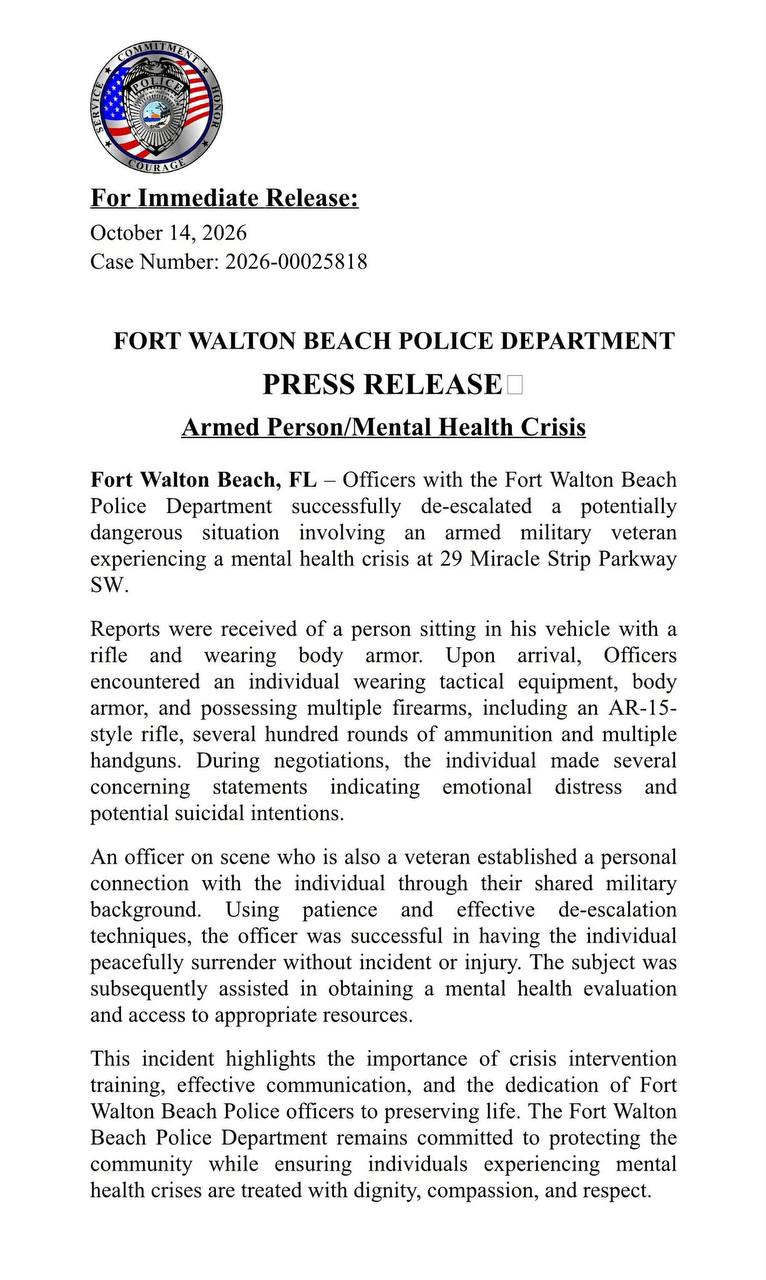
FWB Police Report Peaceful Resolution of Armed Mental-Health Crisis
An October 14 release describes a surrender without injury. The source is now archived; the account has not been independently corroborated.