
Virginia’s 1776 Warning Against General Warrants
Section 10 names the problem: searches without evidence and seizures without particular accusations.

Virginia’s Declaration of Rights did more than praise liberty in broad language. Section 10 identified a specific mechanism of abuse: a general warrant that could authorize searches of suspected places without evidence of a committed act, or seizure of people without names or particular, supported accusations. The declaration was adopted June 12, 1776. [1]
Read the original in Crypt of Echoes
Specificity was part of the protection
The section objects both to the evidentiary basis for a search and to the description of the people or offenses involved. Its criticism is directed at authority broad enough to let an officer proceed without those particulars. It calls such warrants oppressive and says they ought not to be granted. [1]
That is a more concrete claim than saying officials should simply exercise good judgment. The document identifies features of the authorization itself that make it dangerous. The language gives a reader something to inspect in the warrant, not merely a promise to trust the person carrying it.
Read the adopted text as its own document
The archive distinguishes the adopted declaration from a surviving draft associated with its preparation. This story concerns the adopted text. Drafts help trace development, but they should not be silently substituted for the final declaration.
The preserved June 14 Virginia Gazette printing is a contemporary witness to the June 12 text. It is not the adopted manuscript itself. That distinction matters when identifying what a scan actually shows. [1]
A historical starting point, not a current-law shortcut
The declaration offers an early, explicit argument for evidence and particularity. It is not a substitute for examining a present-day search under the laws and decisions that govern it. The historical text is strong enough to read on its own terms.
Open the archive’s adopted declaration and locate section 10. The record keeps the contemporary printing and reading text together so the argument can be checked against an actual source. [1]
Sources & archive records
- A Declaration of Rights
Virginia Declaration of Rights, adopted June 12, 1776, section 10; contemporary Virginia Gazette printing of June 14.
Keep reading
View all
A Workshop Flyer Opens a Window Into Fort Walton Beach’s Building Rules
The notice invites questions about the Land Development Code. The next useful document is the actual draft.

The First Federal Law Began With a Promise to the Constitution
The June 1, 1789 oath act turned Article VI into a sequence of words, deadlines, and recorded obligations.
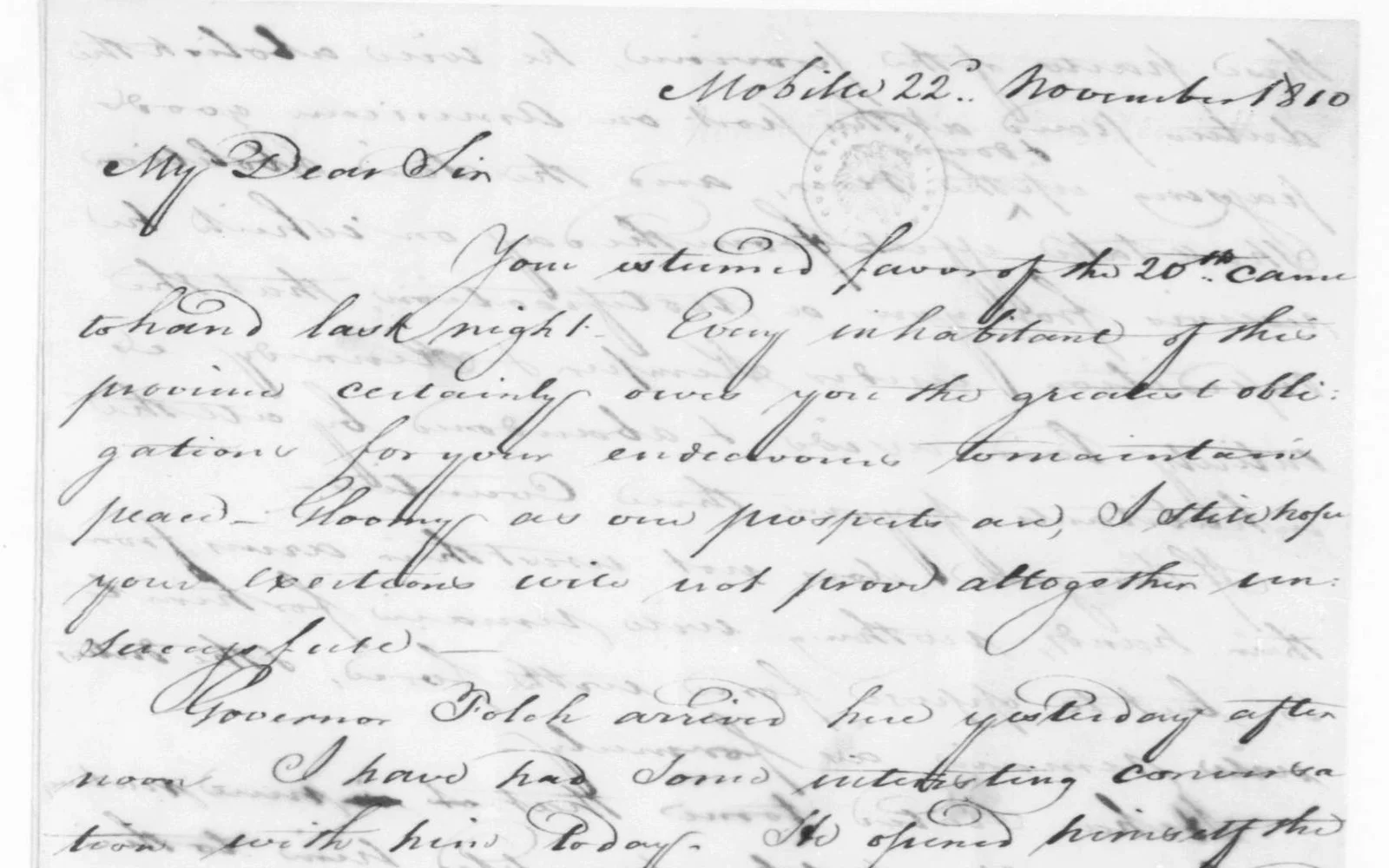
"Averse to Flatter Treason": Mobile's Offer to Trade Taxes for Peace
In November 1810, with an armed American expedition preparing to march on Spanish Mobile, the governor offered through a local merchant to scrap the duties that had angered settlers upriver. A federal judge's private reply shows why he would not use the offer as a bargaining chip.