
Part of the October 11 archive roundup, published October 12.
Government / October 11 archive roundupThe First Federal Law Began With a Promise to the Constitution
The June 1, 1789 oath act turned Article VI into a sequence of words, deadlines, and recorded obligations.

The first chapter of the First Congress’s laws concerns neither a tax nor a department. It concerns an oath. Approved June 1, 1789, the act prescribed how officeholders would promise to support the Constitution—and who would administer that promise to whom. [1]
Read the original in Crypt of Echoes
A short sentence, a detailed procedure
The formula was brief: the person would swear or affirm support for the Constitution of the United States. The procedural directions took considerably more space. Senators, the presiding officer of the Senate, representatives, the Speaker, and congressional clerks each had a place in the sequence. [1]
For a newly elected House, the act required the Speaker and members present to take the oath before entering on other business. Later arrivals were to take it before taking their seats. The document made timing part of the obligation, rather than leaving the ceremony as a loosely defined custom. [1]
The obligation reached into the states
Section 3 addressed state legislators and state executive and judicial officers. It also required a record or certificate of the oath in accordance with state procedures. Section 4 addressed officers appointed under United States authority before they acted in office. [1]
That is a useful distinction when reading the founding record. This law supplies an oath and a process for administering it. It does not establish that every alleged constitutional violation is automatically a crime, nor does an oath certificate prove that an official later honored the promise.
Read the two-page act
Crypt of Echoes preserves the statute pages and a separately identified reading transcription. Begin with chapter I on printed page 23 and follow its continuation onto page 24; the next act begins below it. The original scan lets readers check both the wording and the limits of this early accountability measure. [1]
Sources & archive records
- An Act to regulate the Time and Manner of administering certain Oaths.
1 Stat. 23–24, chapter I, approved June 1, 1789. Preserved statute scan and labeled reading transcription.
Keep reading
View all
A Workshop Flyer Opens a Window Into Fort Walton Beach’s Building Rules
The notice invites questions about the Land Development Code. The next useful document is the actual draft.
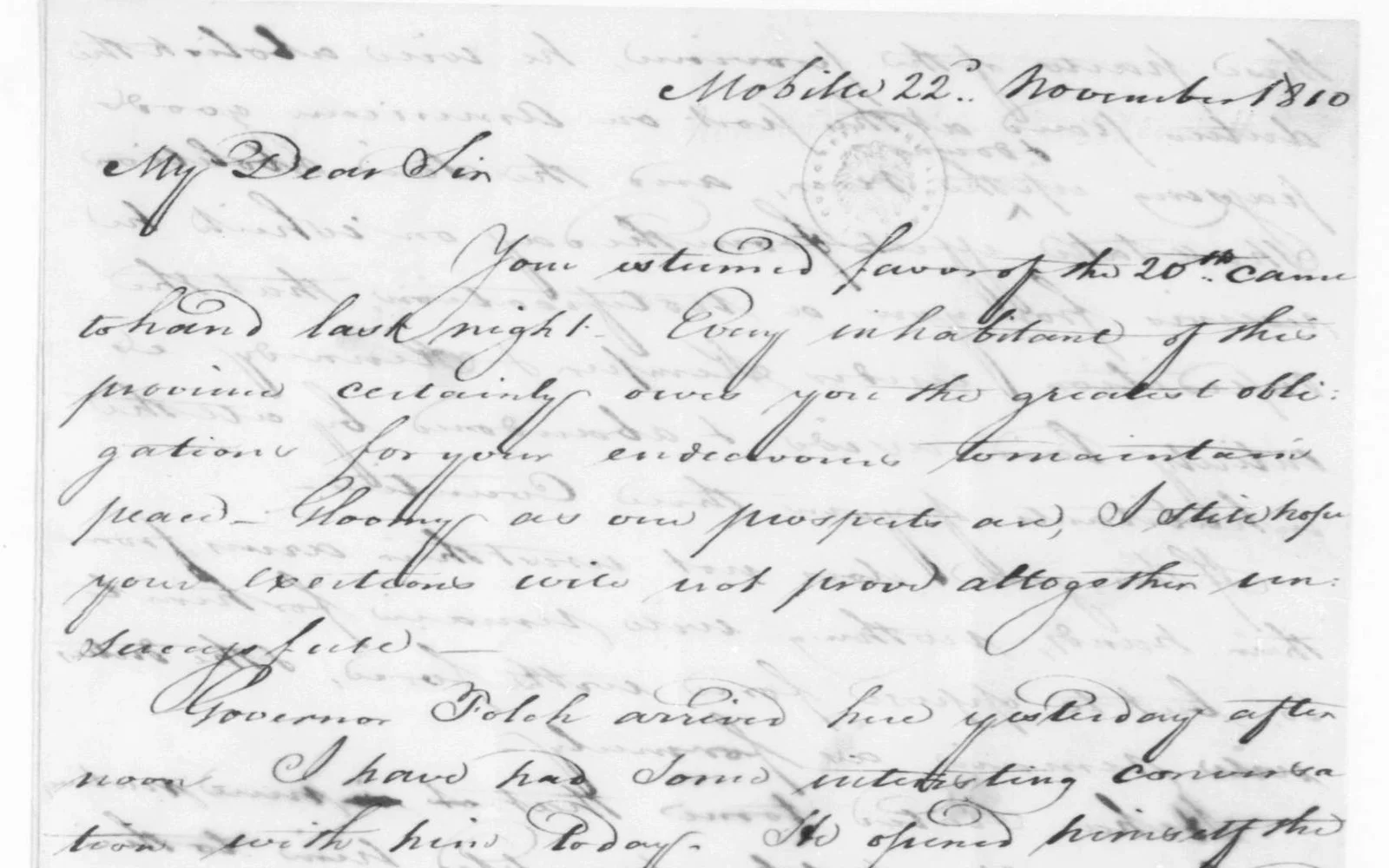
"Averse to Flatter Treason": Mobile's Offer to Trade Taxes for Peace
In November 1810, with an armed American expedition preparing to march on Spanish Mobile, the governor offered through a local merchant to scrap the duties that had angered settlers upriver. A federal judge's private reply shows why he would not use the offer as a bargaining chip.

Two Water Advisories, Two Different Problems
The October 2 and October 11 notices preserved in the archive identify different places, evidence, and triggers.