
A Working City in Abbreviations: Montgomery’s 1866 Directory
Printers, machinists, boarding houses, and addresses turn a list of names into a guide to everyday geography.
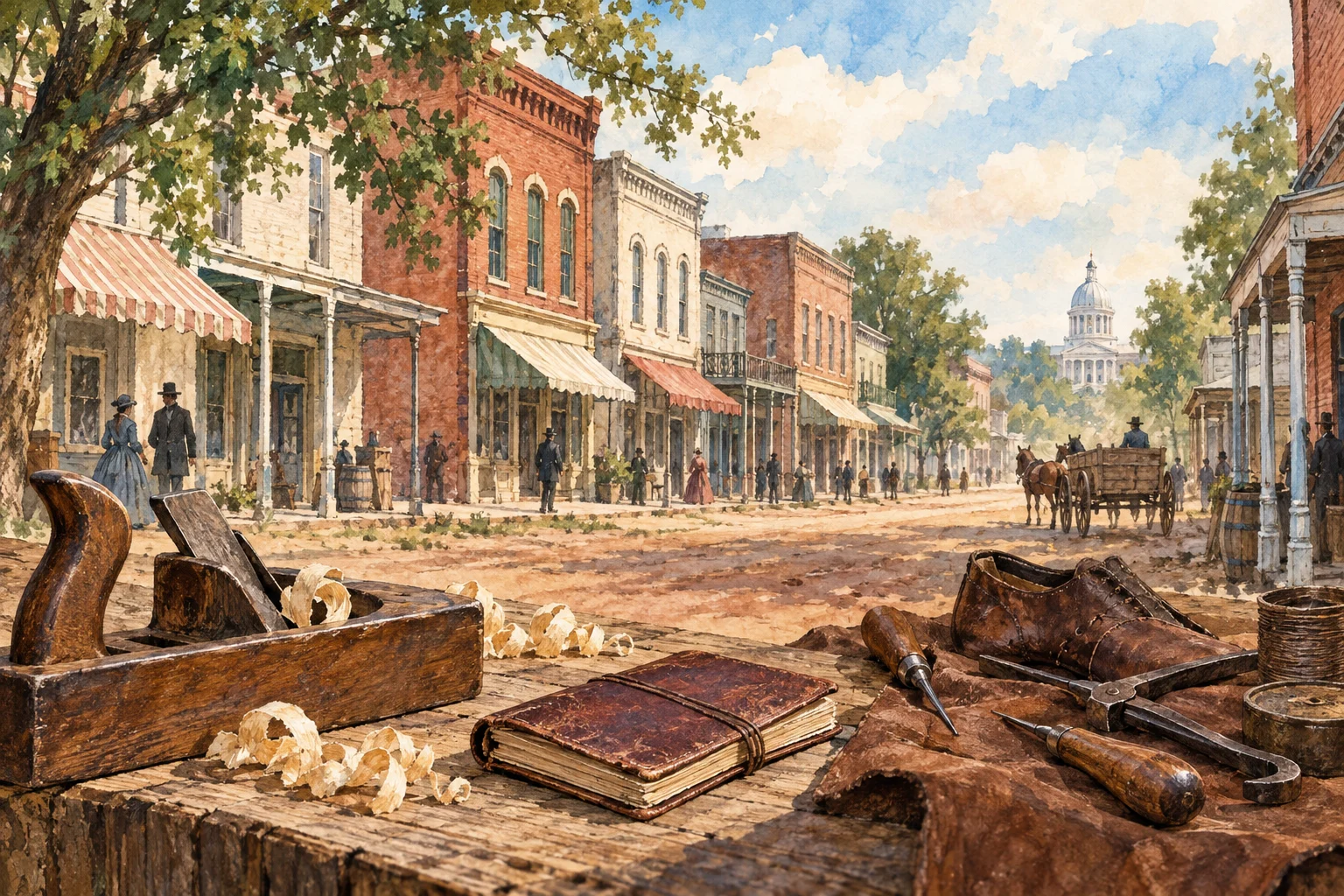
An 1866 Montgomery directory asks readers to learn a small language before they walk its streets. “Bet” means between, “opp” opposite, “clk” clerk, “h” house, and “bds” boards. With that key, compressed entries begin to describe where people worked and where they lived. [1]
Read the original in Crypt of Echoes
An address could have two parts
The opening listings pair occupations with workplaces and, in many cases, a house, room, or boarding address. A printer might be connected to a newspaper office and then to a boarding house. Railroad workers appear through shops, depots, and the lines employing them. [1]
The entries make it possible to ask questions about proximity: which businesses clustered together, which occupations recur, and how a workplace differed from a residence. They do not, without further evidence, tell us the daily route a particular person took or the conditions inside a listed home.
Read the key before trusting the search result
Abbreviations save space but create traps for a modern reader. A name followed by “wid” is labeled as a widow; “do” repeats preceding information. Misreading one abbreviation can turn an employment address into a residence or erase a relationship between consecutive entries. [1]
The scan’s text layer is useful for finding a name, but its OCR can misread letters and break words apart. A search hit is a pointer back to the page, not a substitute for checking it. The full image preserves the original grouping and punctuation.
A directory is not a census
This book records the people, establishments, and information its compilers included. It should not be treated as a complete account of everyone living in Montgomery, or as proof that someone absent from its pages was absent from the city.
Crypt of Echoes preserves the complete 120-page scan. Start with the abbreviation key and opening entries, then follow a street or occupation through the volume. The method reveals more than extracting a single name and moving on. [1]
Sources & archive records
- Directory of the City of Montgomery, and Historical Sketches of Alabama (1866)
Perry & Smith, Montgomery directory, March 1866; abbreviation key and opening listings, PDF pp. 7–11. Complete 120-page scan retained.
Keep reading
View all
A War Historian Left Room for Corrections
William H. Amerine’s 1919 introduction tells readers where his account came from—and invites them to add to it.

Before Alabama Wrote a Constitution, It Chose a Doorkeeper
The convention’s July 5, 1819 opening entry records the practical work of creating a body that could govern its own proceedings.
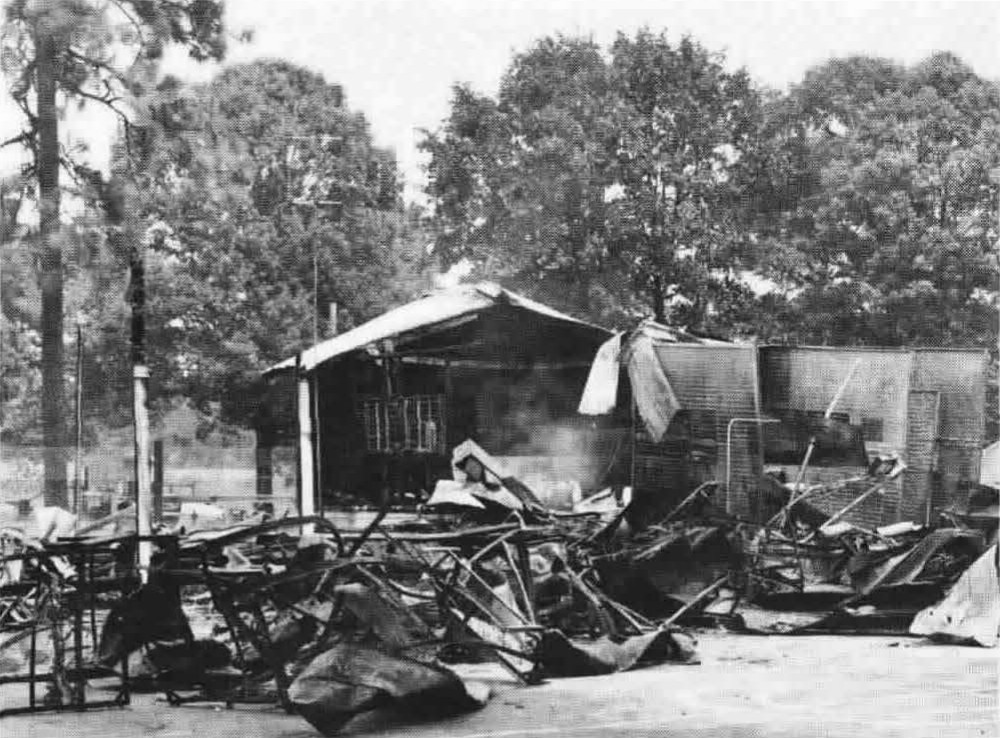
Road Camp 12: The Berrydale Fire That Killed 38 Prisoners
On a Sunday night in 1967, fire swept through a wooden prison barracks in the Florida Panhandle. Fifty-one men were inside. Only thirteen survived.